
Piston Compressor Buying Guide for Workshops
-
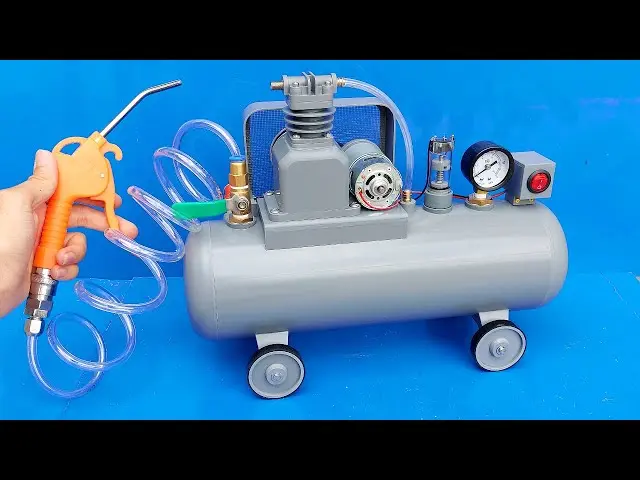
Look, if you are currently staring at a blank corner in your commercial workshop, auto-body garage, or manufacturing bay, planning to buy your primary air plant is the single most high-stakes hardware choice you will make this year. Most floor managers approach this buying decision entirely backward: they wander into a big-box tool retailer, look at a shiny coat of paint on a massive steel tank, read a few inflated marketing claims about peak horsepower, and hand over the company credit card. That lazy approach is a direct route to buying a machine that either starves your pneumatic tools for air or constantly trips your building's main electrical breakers mid-shift. Squeezing genuine long-term production out of a workshop setup requires moving past surface-level retail specs and calculating the hard physical, electrical, and thermal realities that dictate a pump's actual survival under load.
If your engineering team is currently measuring tool air draws, auditing electrical panel capacities, or trying to match continuous operational demands to heavy-duty cast-iron hardware, you can evaluate certified workshop baselines directly at https://ablepower.com.au/product-category/air-compressors/piston-compressors/. But before you sign off on any delivery order, you need to step back from the glossy brochures and master the deep, unyielding mechanics of real workshop air procurement.The "Free Air Delivery" Lie: Escaping Displacement Confusion
The absolute biggest trap on a compressor specification sheet is a metric called piston displacement. Sales reps love to highlight this number because it sounds impressive—it is the theoretical volume of air the piston can physically sweep through inside the cylinder over one minute.
The cold engineering truth is that displacement is a useless math equation that completely ignores the real-world losses caused by friction, clearance pockets, and thermal resistance.
When you are buying for a commercial floor, you must ignore displacement entirely and search for the Free Air Delivery (FAD) rating, tested under strict ISO 1217 standards. FAD measures the actual, usable volume of compressed air exiting the tank and reaching your air lines, completely accounting for internal efficiency losses. A pump boasting a massive displacement might lose up to thirty percent of its air volume due to heat expansion and valve lag inside the head. If your team matches your pneumatic tool consumption—like heavy impact wrenches or continuous paint sprayers—to a displacement number rather than the true FAD metric, your shop will spend half the day sitting idle, waiting for a starved air tank to struggle back up to pressure.
V-Twin Cast Iron vs. Inline Aluminum Pumps: The Thermal Mass Reality
When evaluating the physical construction of a workshop piston pump, you will face two main structural designs: lightweight aluminum blocks with thin cast-iron sleeves, or heavy, pure cast-iron V-twin configurations.
Choosing the cheaper, lighter metal to save a few dollars on upfront capital is a massive mistake that will catch up to your maintenance budget within the first hot summer shift.Aluminum blocks are excellent at shedding heat quickly during light, sporadic use, but they lack the pure structural integrity and thermal mass required for continuous workshop abuse. Under non-stop demands, an aluminum pump flexes, causing the piston walls to ovalize and allowing high-pressure air to blow straight past the rings into the oil sump. A heavy, solid cast-iron V-twin pump behaves entirely differently. The intense weight of pure cast iron provides a massive thermal sink that absorbs extreme structural vibrations and handles punishing heat cycles without warping or losing cylinder alignment. The V-twin geometry balances the mechanical forces perfectly across the crankshaft, extending your main bearing life by thousands of hours and keeping the pump running cool when the floor schedule gets brutal.
Deciphering the Receiver Tank Formula: Volume vs. Stored Energy
Many buyers assume that buying a massive five-hundred-liter air tank automatically solves all their workshop air volume problems. This is a fundamental misunderstanding of pneumatic engineering physics. A storage tank does not create air; it merely acts as a temporary buffer or an energy battery between the spinning pump head and your pneumatic tools.
If your air pump’s true FAD output cannot keep pace with the continuous consumption of your tools, a massive tank will simply take longer to empty out, and then leave your tools completely starved anyway while the undersized pump runs non-stop trying to fill it back up.When calculating tank sizing, use a strict mechanical rule of thumb: match your receiver tank volume to your pump's FAD output at a four-to-one ratio. If your pump delivers five hundred liters of usable air per minute, your tank should sit right around one hundred and twenty-five to two hundred liters of storage capacity. This layout provides enough stored energy to handle sudden, short surges in air demand—like a mechanic blasting a stubborn wheel nut with an impact gun—without forcing the electric motor to restart constantly, yet keeps the volume small enough that the pump can rapidly recharge the system without running into destructive duty-cycle heat limits.
Electrical Infrastructure Constraints: Phase Limits and Inrush Current ProtectionYou cannot simply plug a heavy commercial compressor into a standard wall socket and expect it to survive. Squeezing air down into a high-pressure tank requires an immense amount of physical twisting force, which demands serious electrical current from your shop’s supply board.
Trying to run a high-output pump on a standard single-phase electrical supply is a recipe for fried control switches and constant circuit breaker drops.Once a piston pump moves past a true three-horsepower electric motor requirement, the incoming single-phase amperage draw becomes far too high for regular building wiring to handle safely. For genuine industrial applications, you must verify your facility has a dedicated Three-Phase 415-Volt Power Line. Three-phase power delivers smooth, balanced electrical current across three separate lines, allowing your compressor motor to generate high starting torque with a fraction of the line amperage. Furthermore, ensure the machine is fitted with a specialized Star-Delta starter assembly or a soft-start control box; this component prevents a massive, violent spike in current when the motor boots up under full tank pressure, protecting your delicate shop electronics and keeping your power bill under control.
The Real Takeaway
At the end of the day, picking the right air system for your shop floor isn't about simply chasing the cheapest price tag or grabbing the biggest metal tank available on the market. It is a precise, calculated process of calculating true FAD delivery metrics, picking cast-iron thermal mass over cheap alloys, balancing your tank storage ratios, and securing the right electrical infrastructure.
By prioritizing True FAD over Displacement, investing in Cast-Iron V-Twin Blocks, balancing your Receiver Tank Ratios, and protecting your grid with Three-Phase Electronics, you take all the gamble out of your machine setup. Stop treating your core workshop air supply like a simple, plug-and-play hand tool purchase. Master the physical mechanics of your tool load profile, lock down your electrical limits, and let ruggedized, heavy-duty engineering protect your workshop's daily production margins.